pain.com personal pain assessment
 460454129
Your path to pain relief starts now.
You know your pain. We understand the science behind relief.
During this personal pain assessment, you'll answer a few questions about your experience with pain. And together, we'll explore potential solutions that could bring you relief, a better quality of life and more time for what matters most to you.
It should take less than five minutes.

Let’s get to know you.
Before we start, we’ll ask a few quick questions to personalize your results.

Now, let’s learn about your pain, [Firstname].
By sharing more about your unique pain, we can better understand your situation and recommend the best solution for you.
first, an introduction
What’s your first name?
We’ll use this to make your experience personal
Just between us
How old are you?
Which gender best describes you?
What type of insurance do you have?
Choose all that apply
Have you been suffering from pain for more than 6 months?
What is your average level of pain?
Where is your pain located?
Choose all that apply
What treatments have you tried so far?
Choose all that apply
Are you currently getting treatment
from a pain specialist?
Which Boston Scientific chronic pain relief solutions
are you interested in?
Choose all that apply
Have you been diagnosed with vertebrogenic pain?

Well, hello there
that’s it, you’re all done
Based on your answers [Firstname], you may be a candidate for:
Spinal Cord Stimulation (SCS)
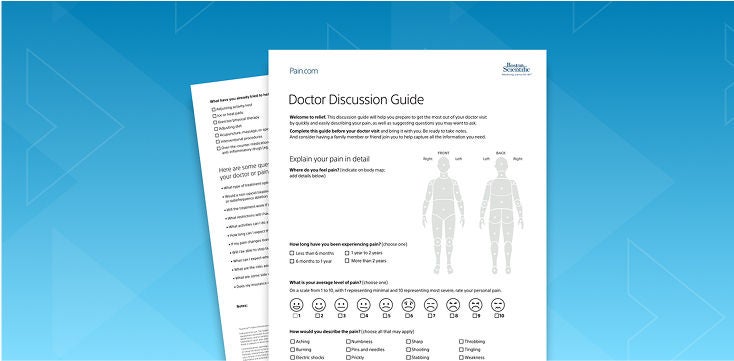
Fill out the form below and one of our U.S.-based Patient Education Specialists will call you to discuss treatment options and help you find a pain management specialist. We’ll also email you a Doctor Discussion Guide to help you get the most out of your doctor visit.
What to expect from Spinal Cord Stimulation (SCS)
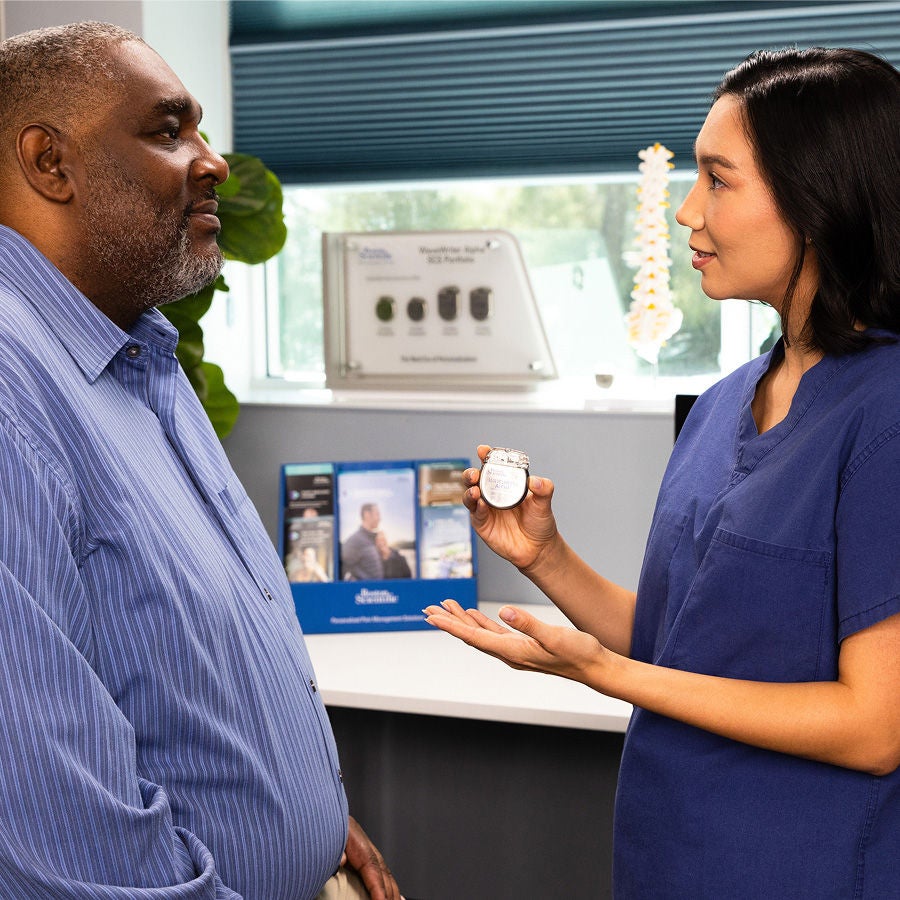
SCS is designed to help you get long-term pain relief in different parts of your body. You can test drive SCS in a short trial. If your trial is successful, your pain management specialist can help you get a permanent implant.
SCS resources
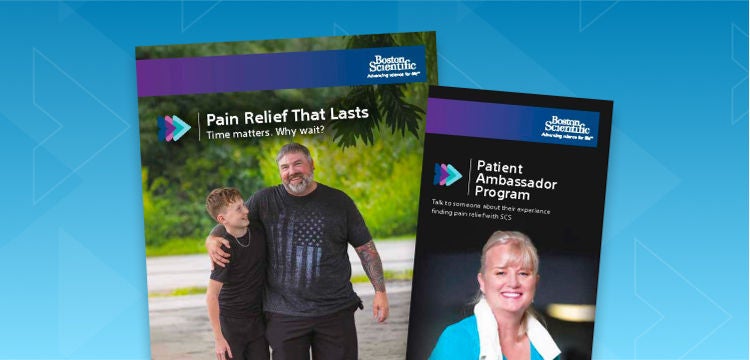
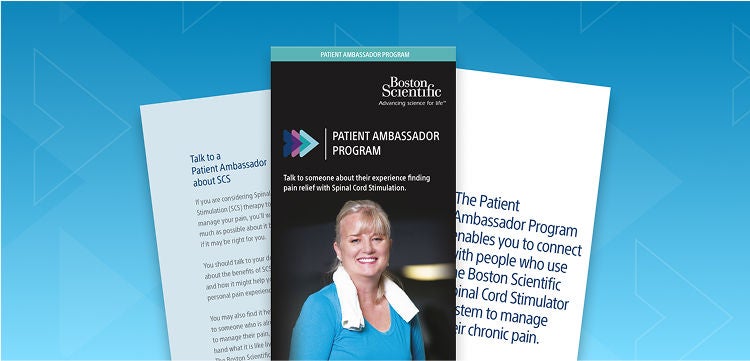
Find the tools you need to take your next step. Order or download information kits, guides and brochures — including our Doctor Discussion Guide — videos, and more.
- Neil
- Karen
- Mary
The patient quotes in this material describe real personal experiences. Individual results may vary. Patients can experience different levels of pain management and different changes in their activities and use of medications. Consult with your physician to determine if you are a candidate for this procedure and what you may gain from the therapy.
Thank you, [Firstname]
Explore your recommended treatment:
Spinal Cord Stimulation (SCS)
What to expect from Spinal Cord Stimulation (SCS)
SCS is designed to help you get long-term pain relief in different parts of your body. You can test drive SCS in a short trial. If your trial is successful, your pain management specialist can help you get a permanent implant.
SCS resources
Find the tools you need to take your next step. Order or download information kits, guides and brochures — including our Doctor Discussion Guide — videos, and more.
- Neil
- Karen
- Mary
The patient quotes in this material describe real personal experiences. Individual results may vary. Patients can experience different levels of pain management and different changes in their activities and use of medications. Consult with your physician to determine if you are a candidate for this procedure and what you may gain from the therapy.
Based on your answers [Firstname], you may be a candidate for:
The Intracept™ Procedure
To learn more about the Intracept Procedure, fill out the form below. We'll send you an email with more details about the Intracept Procedure — including our Doctor Discussion Guide — to help you explore this treatment solution.
Check your inbox for this important information, and take the first step toward lasting relief from chronic pain. If you have any questions, we’re here to help guide you through the process.
Vertebrogenic pain and the Intracept™ Procedure
Understand the common symptoms for vertebrogenic pain and how the Intracept Procedure can get you back to the life you've been missing.
- Alison
- Bill
- Jeff
The patient quotes in this material describe real personal experiences. Individual results may vary. Patients can experience different levels of pain management and different changes in their activities and use of medications. Consult with your physician to determine if you are a candidate for this procedure and what you may gain from the therapy.
Thank you, [Firstname]
Based on your answers [Firstname], you may be a candidate for:
The Intracept™ Procedure
Vertebrogenic pain and the Intracept™ Procedure
Understand the common symptoms for vertebrogenic pain and how the Intracept Procedure can get you back to the life you've been missing.
- Alison
- Bill
- Jeff
The patient quotes in this material describe real personal experiences. Individual results may vary. Patients can experience different levels of pain management and different changes in their activities and use of medications. Consult with your physician to determine if you are a candidate for this procedure and what you may gain from the therapy.
Sorry, [Firstname], based on your answers
Boston Scientific solutions
aren’t right for your pain, yet

Your pain journey isn't over
While our current solutions may not be the right fit for your pain at the moment, that doesn’t mean they won’t be in the future. More importantly, it doesn’t mean relief is impossible.
Pain management is a deeply personal journey, and there are many options to explore. We encourage you to consider reaching out to a pain management specialist who can help you find the best path forward.
We’re here to support you every step of the way, helping you move closer to relief.

Helpful articles for finding relief
Check out our library of articles to learn more about causes and symptoms of pain, treatment options, and coping strategies.
Thank you, [Firstname]
Here’s some more information that might be helpful
Helpful articles for finding relief
Check out our library of articles to learn more about causes and symptoms of pain, treatment options, and coping strategies.
Boston Scientific's chronic pain solutions
Why Spinal Cord Stimulation?

Manage your chronic pain and rediscover a better quality of life
Spinal Cord Stimulation (SCS) is an innovative, drug-free solution designed to provide relief from chronic pain. By targeting the nerves that send pain signals to your brain, SCS may help reduce discomfort and restore your ability to enjoy everyday activities.
You should consult with a pain management specialist to determine what treatments may be right for you. Use our Doctor Locator to find a specialist near you and take the next step toward lasting pain relief.

Time
If you’ve been living with pain for six months or longer, SCS may offer you the lasting relief you’ve been searching for. Chronic pain often resists traditional treatments, but SCS is designed specifically to address this ongoing pain effectively.

Strength
Living with pain that's distressing (level 6) or worse, is challenging and can disrupt your everyday life. SCS therapy works to reduce pain intensity through gentle electrical pulses, giving you the relief you need to regain control and focus on what matters most.

Location
Pain in your upper or lower back, hips, buttocks, legs, or feet... can be particularly debilitating. SCS is specifically designed to target these common areas of discomfort, personalizing relief to the spots where you need it most.
Your path to pain relief starts here
You’ve taken the important first step in identifying potential tools to manage your pain. Now, it’s time to take action. Connect with a pain management specialist to confirm your eligibility for SCS and develop a personalized treatment plan.
Use our Doctor Locator to locate a specialist near you, or you can chat with one of our U.S.-based Patient Education Specialists for more guidance. Together, we’ll help you move closer to a life with less pain.
find personalized pain relief
About Spinal Cord Stimulation
Boston Scientific’s SCS therapy is clinically proven to provide effective, lasting relief from chronic pain. It’s safe, drug-free, and FDA-approved. And it can be personalized to your unique pain.
How does SCS work?
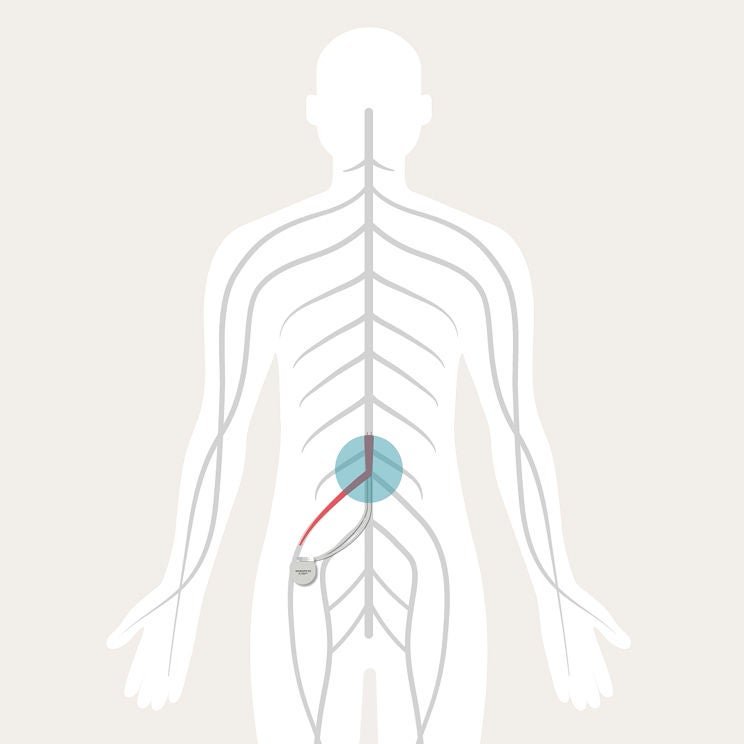
You feel pain when your nerves send pain signals to your brain through your spinal cord. Your SCS System is designed to interrupt those signals, so you don’t feel them as pain.
The SCS System is made up of a stimulator and leads, which are placed in your back. The stimulator sends mild pulses through the leads. These pulses interrupt pain signals on their way to your brain.


Take the next step to lasting relief
Spinal Cord Stimulation has transformed the lives of many patients dealing with chronic pain. Now, it’s your turn to explore this therapy and see if it’s the right fit for you.
Use our Doctor Locator to connect with a qualified pain management expert in your area. You can also connect with our Patient Education Specialists for personalized guidance. Together, we’ll help you move closer to a life with less pain.
Boston Scientific's chronic pain solutions
Why The Intracept™ Procedure?
The clinically proven option for lasting relief from chronic low back pain
Living with chronic low back pain can feel overwhelming, especially when other treatments haven’t worked. The FDA-cleared, implant-free Intracept Procedure is specifically designed for people like you. By targeting the source of your pain, it offers a safe and effective way to reduce discomfort and improve your quality of life.
You should consult with a pain management specialist to determine what treatments may be right for you. Use our Doctor Locator to find a doctor near you and take the next step toward lasting pain relief.

Time
If you’ve been living with chronic low back pain for six months or more, you know how it can take over your life. The Intracept Procedure is designed to help when other treatments haven’t delivered the relief you need.

Strength
Chronic low back pain that's rated at a 6 or worse and caused by vertebral damage can make daily activities unbearable The Intracept Procedure reduces the intensity of your pain, giving you the strength to get back to what matters most.

Location
This solution focuses on vertebrogenic pain, which comes from specific vertebrae in the lower back. The Intracept Procedure precisely targets these areas, interrupting pain signals at the source.

More about your diagnosis
Vertebrogenic pain often shows specific markers called Modic changes on an MRI. If you’ve received this diagnosis, the Intracept Procedure may be an ideal way to address your pain and help you move forward.
Discover lasting relief
The Intracept Procedure has brought relief to many patients with chronic low back pain. Now it’s your turn to explore this proven solution.
Use our Doctor Locator to connect with a trusted pain management doctor, or reach out to our Patient Education Specialists for guidance. Together, we can help you take the first step toward a more comfortable life.
Find relief for your chronic low back pain
About the Intracept™ Procedure
The FDA-cleared, minimally invasive Intracept Procedure offers safe, long-lasting relief for vertebrogenic chronic low back pain.
How does the Intracept Procedure work?
The Intracept Procedure targets a specific source of low back pain called vertebrogenic pain. This pain is caused by damage to vertebrae, which can irritate the basivertebral nerve (BVN).
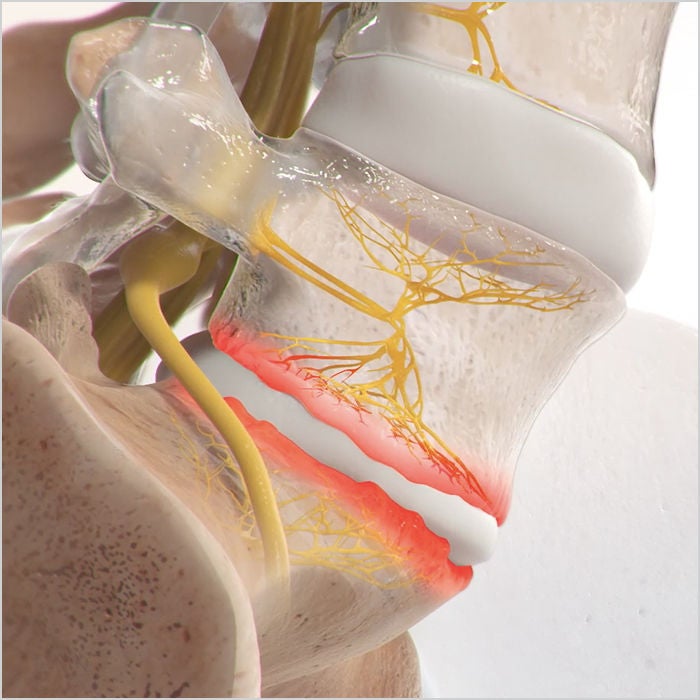
Targeting the nerve
During the procedure, your pain specialist uses advanced imaging and specialized tools to access the BVN.
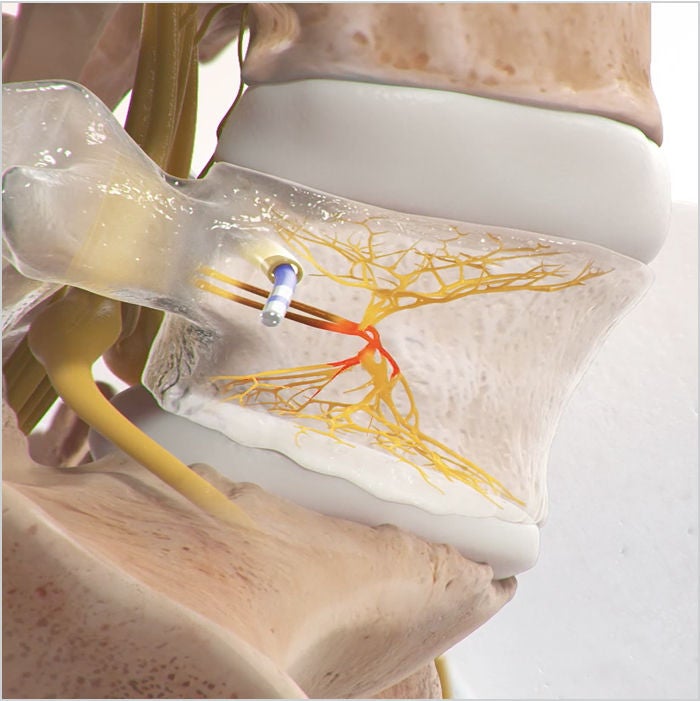
Heating the nerve
Once the BVN has been successfully reached, radio frequency energy will be used to heat the nerve to stop it from sending pain signals.
The Intracept Procedure is different than other ablation procedures because the BVN has not shown an ability to grow back as a pain-transmitting nerve after the Intracept Procedure.
Take the first step toward relief
Don’t let chronic low back pain steal any more moments from your life. The Intracept Procedure has been proven to reduce pain so you can get back to doing the things you love.
Use our Doctor Locator to connect with a pain management expert near you or contact our Patient Education Specialists for personalized support. Together, we’ll help you move closer to lasting relief and a better tomorrow.
Understanding your results
Why am I not qualified?
Your assessment results indicate Boston Scientific solutions aren't right for you yet
Your assessment results indicate Boston Scientific's chronic pain solutions aren't right for you at this time. But that doesn't mean relief isn't possible!
Start your path to relief by finding a pain management specialist near you.

Time
Your pain — while impactful to your life — may not meet the definition of chronic pain yet, which typically means experiencing symptoms for at least 6 months. If your pain continues even with treatment, you should retake the Personal Pain Assessment or speak to your doctor about Boston Scientific's solutions.

Strength
Your reported pain level is starting to impact your life, but it's not high enough yet for you to consider these treatment options. For Boston Scientific's chronic pain solutions to be effective, patients need to experience an average pain level of 6 — Distressing.

Location
Your pain's source isn't covered by one of Boston Scientific's solutions at this time.
What's next?
Although these solutions from Boston Scientific may not be right for you at this time, we encourage you to continue exploring pain management strategies with your healthcare provider.
Remember: Relief is possible. You just need to determine the path that’s best for you.
If you have questions or need additional resources, our Patient Education Specialists may be able to assist you.