







A doctor with curly hair talks to a patient.

The path to pain relief

Exploring the different ways to treat your pain doesn’t have to be stressful. Let’s look at the options available to help you find relief.

A person laughs and lifts small weights in both hands.

Self-care and wellness

Self-care and wellness play a crucial role in managing your pain, whether it’s acute or chronic. By incorporating practices like mindfulness and exercise in your daily routine and maintaining healthy habits, you can make a significant difference in how you experience and cope with pain. 

By prioritizing your well-being, you can take an active role in easing chronic pain while improving your quality of life. 

Types of treatment and support

Diagram of an ice pack.

Cold

Diagram of a hot water bottle.

Heat

Diagram of a person stretching with one arm overhead.

Stretching

Diagram of a person walking and swinging their arms.

Walking

Diagram of a person sitting with legs crossed and arms overhead.

Yoga

Diagram of a person sitting with legs crossed, arms resting at sides.

Meditation

Diagram of leafy vegetables in a bowl.

Nutrition

Diagram of a person resting in a bed.

Sleep

Diagram of a person running.

Exercise

Diagram of a medicine bottle.

OTC Meds

A healthcare professional shows a patient information on a clipboard.

Primary and alternative care

For pain that’s starting to impact your daily activities, your doctor may begin with basic general therapies.  

The most basic treatments for pain don’t require a prescription and can usually be done at home with or without help from a healthcare professional.  If your pain persists, your doctor may progress to more definitive solutions. 

Types of treatment and support

Diagram of a person rubbing someone's back.

Massage therapy

Diagram of a person stretching someone’s leg out.

Physical therapy or chiropractic care
Diagram of a medicine bottle.

Prescription medications

Diagram of a cannabis leaf.

Medical marijuana

Diagram of a device with power symbols connected to four light blue squares, showing energy flow.

Nerve stimulation (TENS)

A doctor talks to a seated patient in an office.

Specialty care

Interventional pain treatments are often the next step your doctor will consider when your pain can’t be treated using noninterventional methods.

These are typically outpatient treatment options designed to provide you with long-term pain relief. They are less invasive and have a quicker recovery time than most surgical procedures and are often used when noninterventional treatments fail and invasive surgery is too aggressive.

Types of treatment and support

A diagram of a syringe filled with liquid.

Epidural steroid injections (ESI) or nerve blocks

Injection of an anesthetic, steroid, and/or anti-inflammatory into your painful area.

A diagram of a pain pump with two cords coming out of the top.

Implantable drug pumps

Implantable pumps deliver pain medication directly to the space surrounding your spinal cord. Alleviating pain with the push of a button.

The pumps delivering the medication need frequent specialized care.

A diagram of a probe with two lightning bolt symbols to show currents.

Radiofrequency Ablation (RFA)

RFA is a minimally invasive outpatient procedure that uses thermal energy to interrupt pain signals at their source. RFA can be used to treat pain in the back, hips, knees, shoulders, feet, and neck, and can provide months—or even years—of relief.

A diagram of a syringe-like tool with wavy lines at the bottom.

The IntraceptProcedure

The Intracept Procedure is a minimally invasive treatment designed to target vertebrogenic pain, a source of chronic low back pain (CLBP). By interrupting pain signals at their origin, this proven solution can provide meaningful, long-term relief for patients with CLBP who haven’t found success with other treatments.

A diagram of a remote for spinal cord stimulation.

Spinal Cord Stimulation (SCS)

SCS therapy can help manage chronic pain in your lower back and limbs by using mild electrical impulses to interrupt pain signals. Boston Scientific SCS Systems offer more therapy options in a single device than any other system, which provides a greater chance of finding effective, long-term relief for your personal pain. Although a minimally invasive treatment, SCS may also be used to help manage pain that is unresolved—or even caused—by more invasive surgical procedures.

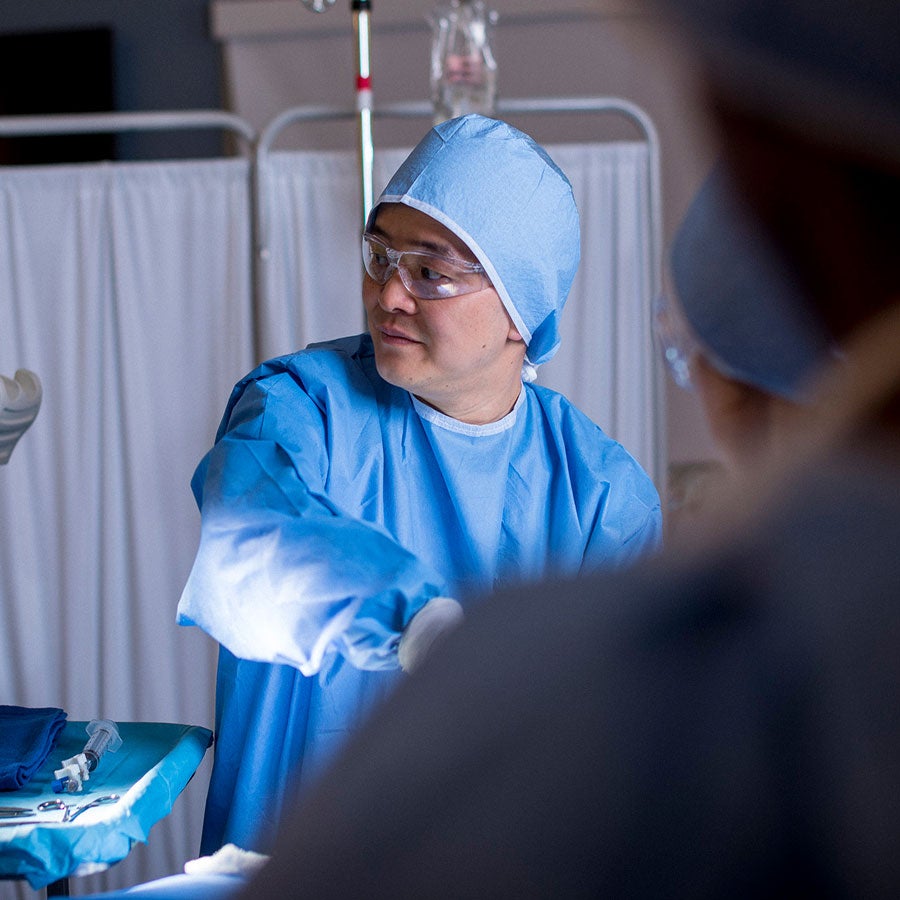
A healthcare professional focuses while in an operating room.

Surgery

Your doctor or pain management specialist may recommend surgery in some select cases to help you find relief.

Surgery is generally more invasive and carries greater risks than other pain therapies.

Types of treatment and support

A diagram of a scalpel.

Surgical treatments and procedures

Surgical treatments such as laminectomy and spinal fusion may be needed when structural problems occur within the spinal column. These treatments may require prolonged postoperative hospitalization and rehabilitation.

Other much rarer surgical techniques — neurolytic blocks with phenol and alcohol, and cordotomy — may be used as a last resort when other therapies fail. These work by permanently destroying nerves and tissue that conduct pain and are most often used to relieve pain due to cancer or other incurable diseases.